







【NewsBuddy】全球頂尖大學冀入北都覓機遇 Global university leaders see opportunities in HK's Northern Metropolis university town

- 普通話
- 廣東話

- 超大
- 大
- 標準
- 小
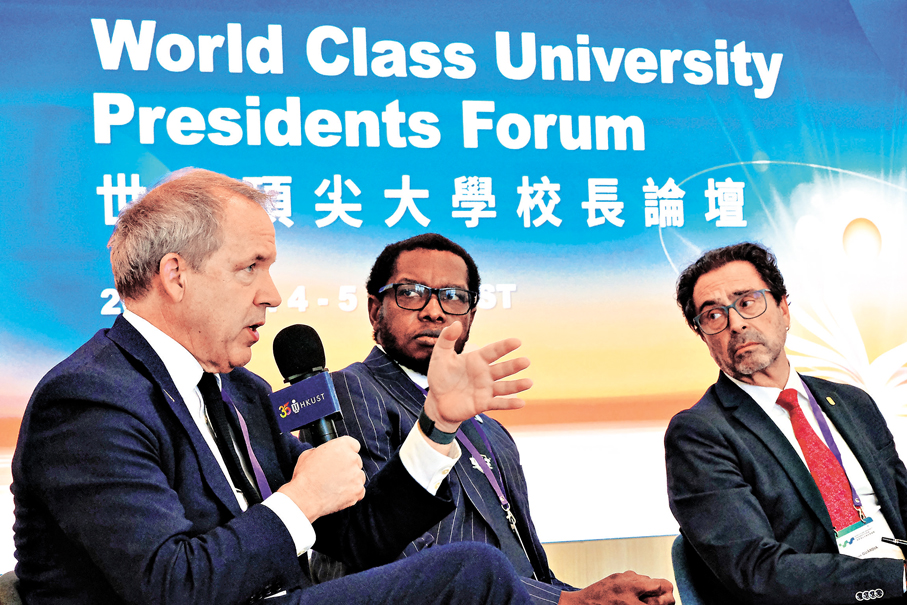
摘錄自11月6日香港《文匯報》:「世界頂尖大學校長論壇2026」本月4日及5日於香港科技大學舉行,匯聚全球各地約50間頂尖大學的逾130位校長、知名學者及國際教育領袖出席,彰顯香港作為連接內地與全球高等教育體系橋樑的獨特優勢與樞紐地位。
The World Class Universities Presidents Forum 2026 was held at The Hong Kong University of Science and Technology (HKUST) on Nov. 4 and 5, bringing together more than 130 university presidents, renowned scholars and international education leaders from around 50 leading universities worldwide. The forum highlighted Hong Kong's unique strengths and role as a bridge connecting the mainland with the global higher education system.
其中,對於香港推動北部都會區大學城建設的宏大構想,全球高等教育界均深表關注。多所頂尖大學的校長於論壇期間接受香港《文匯報》訪問,就入駐北都大學城的意向、對特區政府的期望,以及人工智能(AI)時代下的創新發展分享真知灼見。校長們除對參與北都大學城項目表達強烈興趣,並強調產學研「三螺旋」合作模式及深化國際協作,將會是未來發展的關鍵。
Among the key topics discussed was the city's ambitious plan to establish a university town in the Northern Metropolis. During interviews with Wen Wei Po, university leaders shared their views on potential participation in the project, their expectations of the Hong Kong Special Administrative Region (HKSAR) government, and innovation and development in the age of artificial intelligence (AI). While expressing considerable interest in the initiative, they stressed that the "triple helix" model of collaboration among industry, academia, and research, together with deeper international cooperation, would be crucial to its future development.
英國曼徹斯特大學(The University of Manchester)校長鄧肯·伊維森(Duncan Ivison)形容,特區政府的構想「非常宏偉」,他特別讚賞項目從規劃之初便搭建高校、產業及多方合作的「三螺旋」結構,並指該校正密切跟進,期望進一步了解特區政府的整體構想。他又說,香港已有成熟的合作範本,特區政府釋放出高等教育帶動經濟發展的強烈信號,這在很多地區是難以做到的。
Duncan Ivison, President and Vice-Chancellor of The University of Manchester in the United Kingdom, described the HKSAR government's vision as "very ambitious". He particularly praised the project's plan to establish a "triple helix" framework involving universities, industries and other stakeholders from the outset. Duncan Ivison said the university was closely following developments and hoped to gain a better understanding of the government's overall vision. He added that Hong Kong already had established models of collaboration and that the government had sent a strong signal about the role of higher education in driving economic development, something that was difficult to achieve in many other regions.
英國華威大學(The University of Warwick)校長斯圖爾特·克羅夫特(Stuart Croft)亦高度評價特區政府的戰略眼光,認為全球極少有以大學城為核心、依靠政產學研拉動經濟的全新開發項目,形容是「非常難得的機遇」。他明確表示,將透過與香港院校合作來參與北都發展,不會脫離本地協作而獨立主導,資金統籌亦可由本地主導機構負責。
Stuart Croft, Vice-Chancellor and President of The University of Warwick in the United Kingdom, also praised the government's strategic vision, describing the initiative as a "very rare opportunity". He noted that few places around the world had undertaken entirely new development projects centred on university towns, with economic growth driven by collaboration among government, industry, academia and research institutions. Stuart Croft made clear that The University of Warwick would seek to participate in the Northern Metropolis development through partnerships with local universities rather than taking the lead independently. He added that funding coordination could also be handled by a locally led organisation.
西班牙巴塞隆拿大學(The University of Barcelona)校長瓊·瓜迪亞·奧姆斯(Joan Guàrdia Olmos)指出,該校正將目光從南美轉向中國,「尤其是香港、上海等地」,他期望透過戰略協議在港落地高水平科研創新項目,推動成果轉化。
Joan Guàrdia Olmos, Rector of The University of Barcelona in Spain, said the university was shifting its focus from South America towards China, particularly Hong Kong and Shanghai. He hoped to establish high-level research and innovation projects in Hong Kong through strategic agreements, helping turn research outcomes into practical applications.
英國思克萊德大學(The University of Strathclyde)校長史提芬·麥克阿瑟(Stephen McArthur)則希望借鑑蘇格蘭創新區的經驗,在港探索多方對接的國際合作機遇。南非開普敦大學(The University of Cape Town)校長莫薩·莫沙貝拉(Mosa Moshabela)亦透露,目前正與香港科技大學開展合作,並將與布里斯托大學共建醫院,期望透過創新圈吸引國際人才。
Stephen McArthur, Principal and Vice-Chancellor of The University of Strathclyde in the United Kingdom, said Hong Kong could draw on Scotland's experience with innovation districts to explore opportunities for international collaboration involving multiple stakeholders. Mosa Moshabela, Vice-Chancellor of The University of Cape Town in South Africa, revealed that his university was already working with HKUST and would also establish a hospital jointly with the University of Bristol. He hoped the development of an innovation cluster would help attract international talent.
多位校長亦呼籲,香港應盡快出台更清晰的指引。莫薩·莫沙貝拉強調,特區政府可就北都大學城明確界定「項目成功」的標準及對國際合作方的期望,並制定吸引國際人才的指導性框架。瓊·瓜迪亞·奧姆斯則直言,引進人才離不開政策支持,呼籲特區政府提供資金與政策的靈活性。
Several university leaders also called on the HKSAR government to provide clearer guidelines as soon as possible. Mosa Moshabela said the government should clearly define what would constitute "project success" for the Northern Metropolis university town and set out its expectations for international partners. He also called for a guiding policy framework to attract international talent. Joan Guàrdia Olmos stressed that attracting talent required policy support and urged the government to provide greater flexibility in funding and policy arrangements.
問及北都大學城將如何重塑香港的全球地位,斯圖爾特·克羅夫特認為,大學城的建設給予香港高校提早實現全球深度融合的條件。瓊·瓜迪亞·奧姆斯亦指,現代大學發展不能滿足於簡單的合作協議,必須搭建如歐洲大學聯盟般的全新結構性深度合作架構。莫薩·莫沙貝拉特別提醒,在打造創新生態時,必須兼顧居住空間與社區共融,必須在早期規劃中納入保障性住房及宜居環境的考量。
Asked how the Northern Metropolis university town could reshape Hong Kong's global standing, Stuart Croft said its development would give Hong Kong universities the opportunity to achieve deeper global integration at an earlier stage. Joan Guàrdia Olmos said modern universities should move beyond simple cooperation agreements and establish new, structured frameworks for deeper collaboration, similar to European University Alliances. Mosa Moshabela highlighted the importance of balancing the development of an innovation ecosystem with adequate living space and community integration. He stressed that development projects should be incorporated into the planning process from an early stage.
面對AI時代帶來的挑戰,史提芬·麥克阿瑟指出,AI不會消解教育,而是作為工具輔助培養學生的深度理解力與判斷力,大學應藉此定義未來的職場形態,培養對應的技能人才。
Addressing the challenges posed by the AI era, Stephen McArthur said AI would not undermine education but should instead serve as a tool to help students develop deeper understanding and stronger judgment. He said universities should use AI as an opportunity to redefine the future workplace and cultivate talent with the skills needed to meet emerging demands.
在創新賦能方面,鄧肯·伊維森與斯圖爾特·克羅夫特均強調,科研轉化落地的速度是區分一流高校的關鍵。面對氣候變化等現實難題,大學必須加快將基礎科研轉化為實際價值,並協助大中小企業應用創新技術降本增效。
On innovation and technology transfer, Duncan Ivison and Stuart Croft both stressed that the speed at which research findings are translated into practical applications was a key factor distinguishing leading universities. Faced with real-world challenges such as climate change, universities must accelerate the transformation of fundamental research into practical value, while helping large, medium-sized and small enterprises apply innovative technologies to reduce costs and improve efficiency, they said.
然而,追求速度不能忽視底線。莫薩·莫沙貝拉提醒,在虛假信息泛濫、科學備受質疑的當下,變革必須建立在「信任」之上,這是大學能向社會提供的最寶貴價值。瓊·瓜迪亞·奧姆斯亦分享,大學必須在堅守科研價值的前提下,與私營部門展開戰略協作,藉此重拾並鞏固其作為社會信賴機構的角色。
However, the pursuit of speed should not come at the expense of fundamental principles. Mosa Moshabela warned that amid the spread of misinformation and growing scepticism towards science, transformation must be built on "trust", which he described as the most valuable contribution universities could offer society. Joan Guàrdia Olmos also noted that institutions must uphold their research values while pursuing strategic partnerships with the private sector, thereby rebuilding and strengthening their role as trusted institutions in society.
●DotDotNews
 0
已點過讚





評論( 0 )
0 / 255