







內塔尼亞胡沒贏,卻也沒輸?以色列大選陷僵局 誰能組成新政府?

- 普通話
- 廣東話

- 超大
- 大
- 標準
- 小
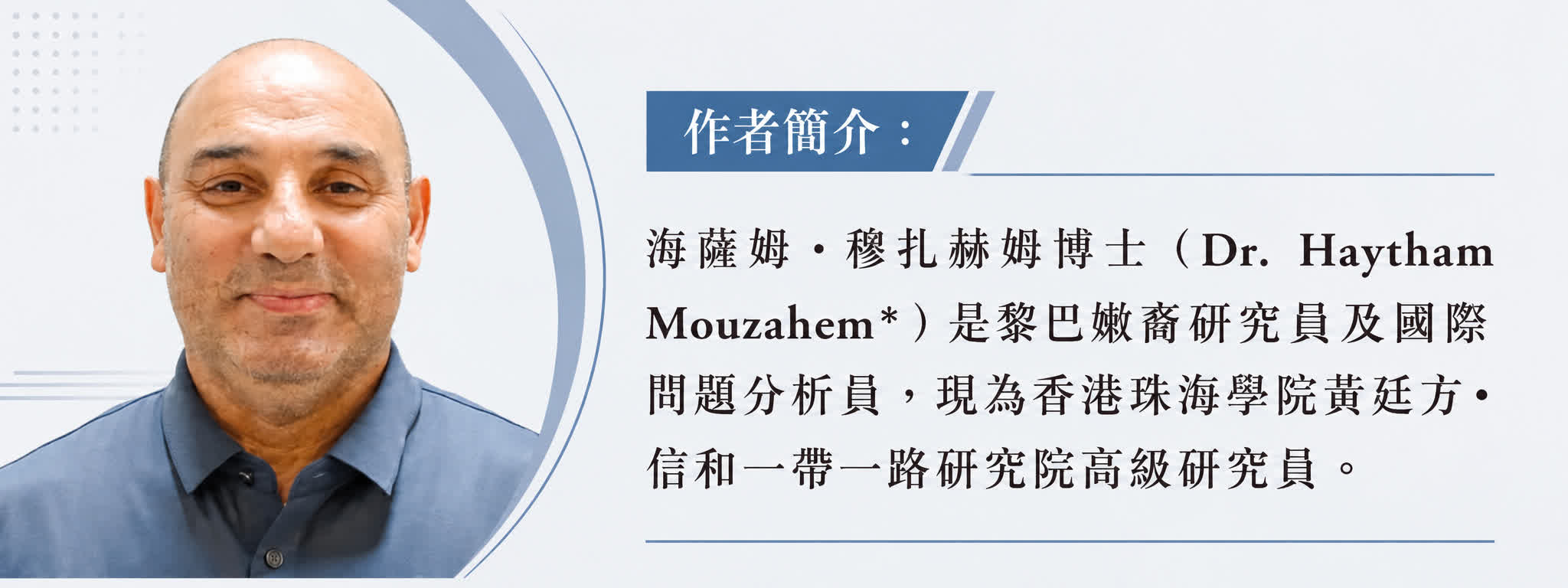
文/海薩姆·穆扎赫姆博士
中文編譯及改寫/香港文匯報記者 胡恬恬
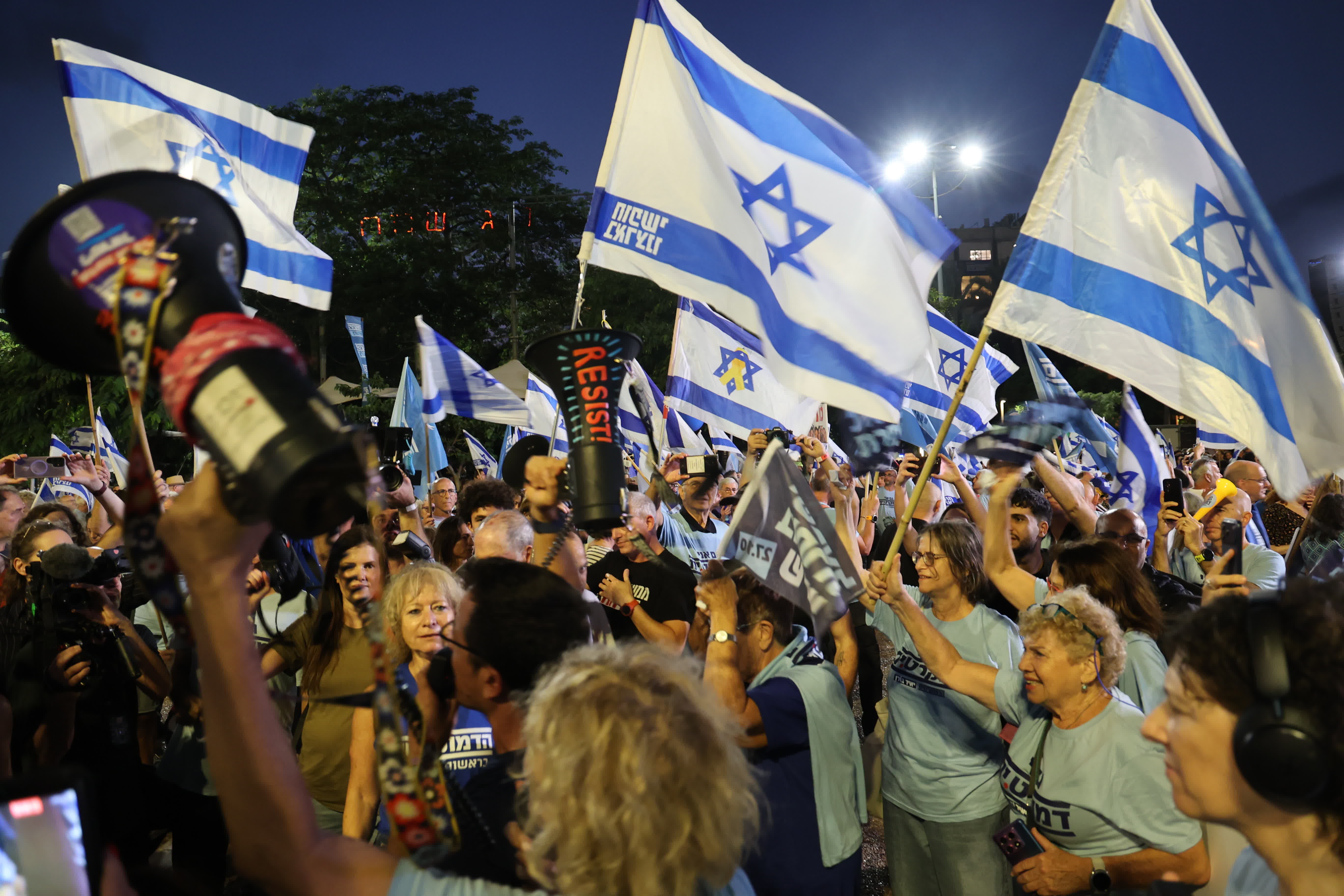
以色列大選結束了,但一個最重要的問題仍然沒有答案:
誰能成為下一任總理?
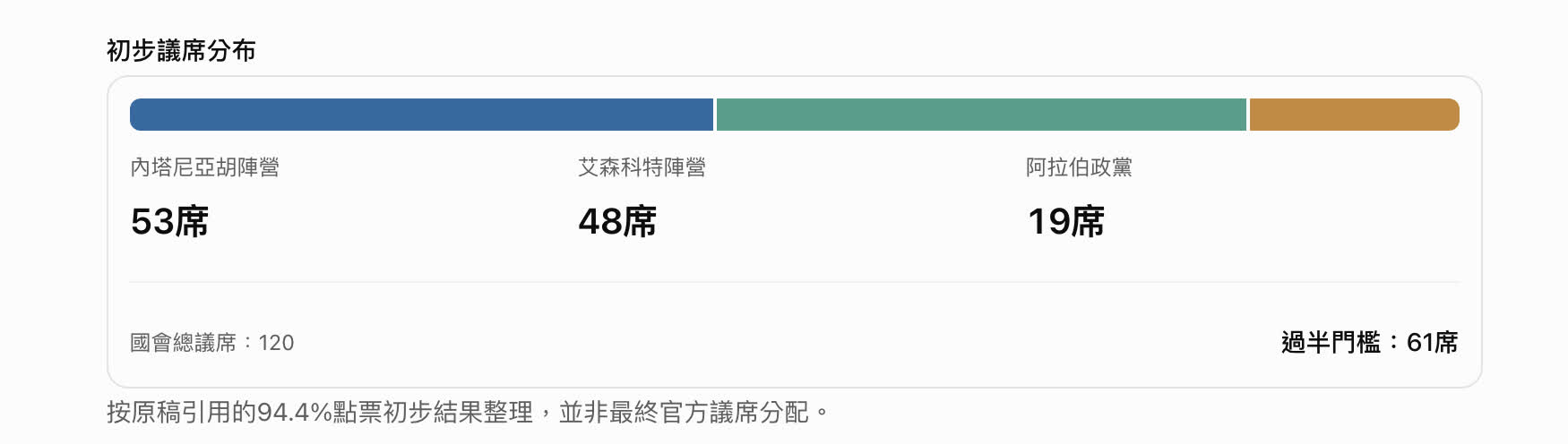
初步點票結果顯示,現任總理內塔尼亞胡領導的右翼陣營取得53席,反對派領袖艾森科特(Gadi Eisenkot)領導的陣營取得48席,兩個阿拉伯政黨則合共取得19席。
以色列國會共有120個議席,組成多數政府通常需要至少61席。
換句話說,內塔尼亞胡的陣營還差8席;而反對派即使與阿拉伯政黨加起來擁有67席,也未必能夠組成政府。
這就是這次選舉最值得玩味的地方。
內塔尼亞胡沒有贏得多數,但反對他的力量,也未必有能力把他趕下台。
在以色列政壇打滾三十多年的內塔尼亞胡,已經無數次被外界認為政治生命即將結束,卻又一次次成功留下。
這一次,歷史會重演嗎?
一場選舉,三個陣營,誰都沒有穩贏
根據以色列第12頻道公布的初步結果,在完成約94.4%選票點算後,內塔尼亞胡所屬的利庫德集團以26席成為國會第一大黨。
艾森科特領導的反對派政黨取得21席,前總理貝內特(Naftali Bennett)領導的政黨取得12席。
阿拉伯政黨方面,聯合名單取得11席,曼蘇爾·阿巴斯(Mansour Abbas)領導的阿拉伯聯合名單取得8席。
另外,民主黨取得8席,數個宗教及右翼政黨則分別取得6至7席。
投票率同樣值得關注。
以色列中央選舉委員會公布,這次投票率達77.7%,比2022年大選高出7.1個百分點,創下1999年以來最高紀錄。
其中,阿拉伯裔以色列公民的投票表現尤其引人注目。
分析人士認為,這與近年極右翼政治力量崛起,以及阿拉伯社區暴力問題加劇有關。
但初步結果仍可能出現變化。
以色列選舉還需要點算約43萬至48萬張所謂「雙信封選票」,主要來自軍人、安全人員、囚犯、住院病人等無法在原登記票站投票的選民。
這批選票的數量相當於約8至9個國會議席,最終分配仍可能令各陣營的席位出現小幅調整。
不過,即使最終各方多出或少了一兩席,整體政治格局恐怕也不會根本改變。
右翼沒有過半,反對派卻難以團結。
這才是問題所在。
反對派明明有67席,為甚麼還是贏不了?
從數學上看,反對派似乎更有優勢。
艾森科特陣營的48席,加上兩個阿拉伯政黨的19席,合共67席,已經超過61席的過半門檻。
但政治不是簡單的加法。
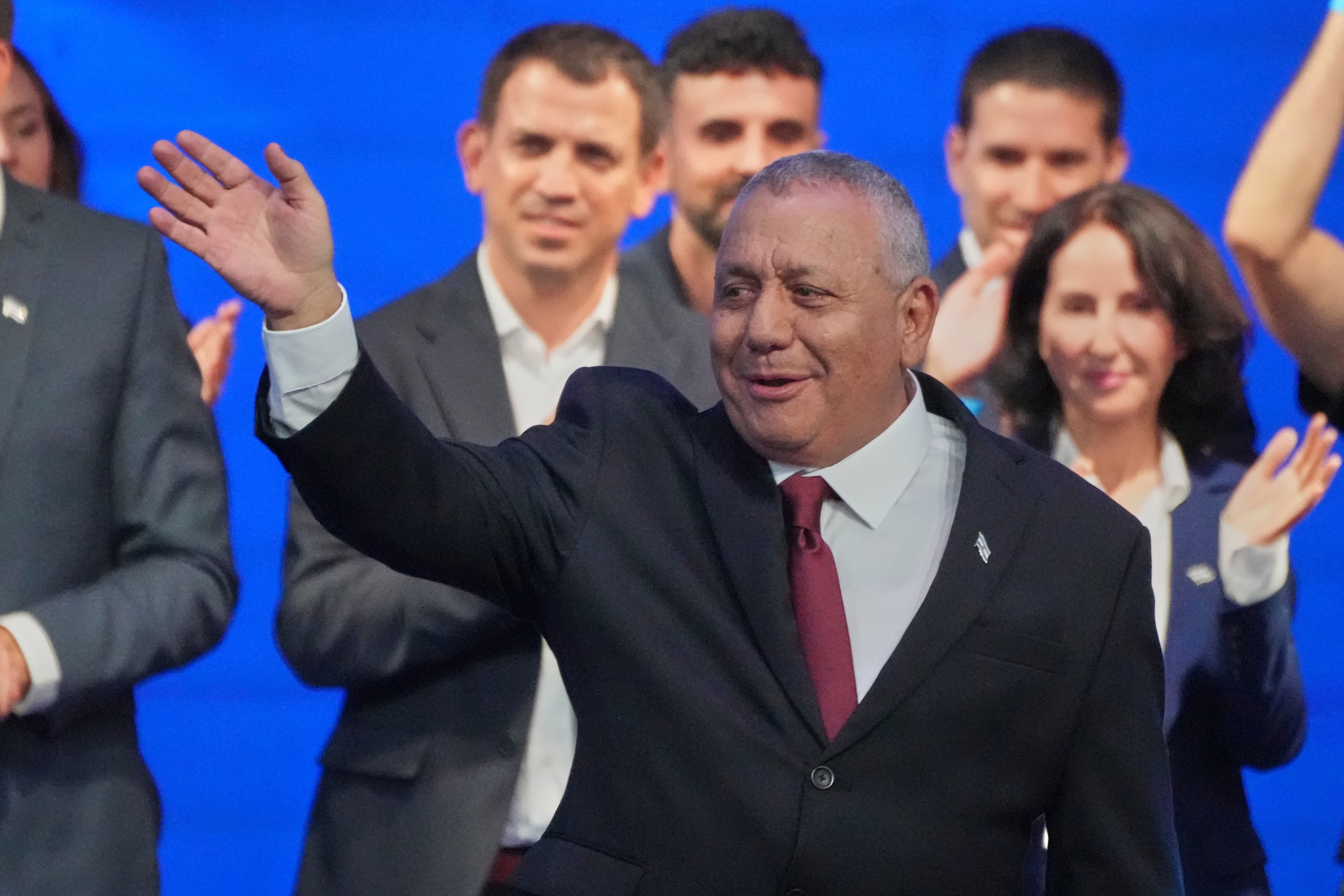
艾森科特要真正組成政府,必須說服不同政治立場的政黨合作。
而這恰恰是最難的一步。
左翼民主黨領袖戈蘭(Yair Golan)已經呼籲反對派接納阿拉伯政黨,並批評內塔尼亞胡試圖把猶太選票與阿拉伯選票對立起來。
阿拉伯聯合名單也表明,願意進行政治合作,盡力結束內塔尼亞胡的執政。
但問題是,反對派內部並非所有人都願意接受。
貝內特和利伯曼(Avigdor Liberman)等右翼反對派領袖,一直反對成立依賴阿拉伯政黨支持的政府。
這就形成一個尷尬局面:
反對派有足夠的議席推翻內塔尼亞胡,卻可能因為不願與阿拉伯政黨合作,而親手放棄這個機會。
對艾森科特來說,這是一道極難跨越的政治障礙。
他既要爭取阿拉伯政黨支持,又不能失去右翼盟友。
任何一方退出,都可能讓組閣努力前功盡棄。
內塔尼亞胡最大的優勢:他可以等
這次大選另一個關鍵,是內塔尼亞胡即使未能取得過半議席,也不需要立即離開總理辦公室。
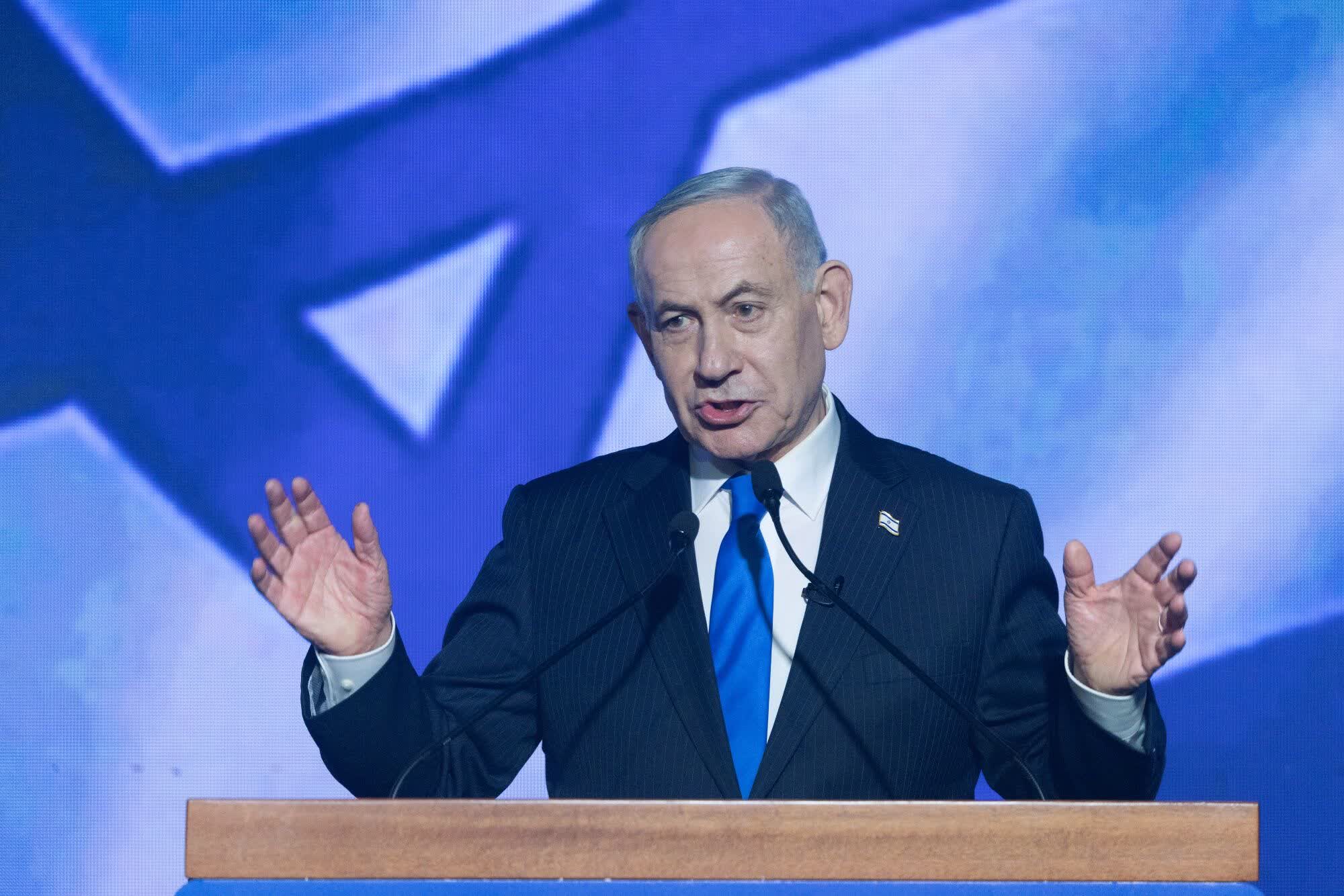
按照以色列的組閣程序,總統赫爾佐格(Isaac Herzog)將與各政黨協商,然後委託他認為最有可能成功的人選籌組政府。
獲委任者通常有28天時間組閣,必要時可以再延長14天。
如果失敗,組閣權可以交給其他候選人。倘若各方始終無法達成協議,以色列便可能再次舉行大選。
這個過程可能持續數周甚至數月。
而在新政府成立之前,內塔尼亞胡仍可擔任看守總理。
這意味著甚麼?
假設艾森科特首先獲得組閣權,他就必須在有限時間內說服立場各異的政黨合作。
內塔尼亞胡卻可以繼續留任,等待對手談判失敗。
艾森科特必須贏得一場複雜的政治談判,內塔尼亞胡卻可能只需要確保對手無法成功。
這就是兩人目前最大的差別。
艾森科特並非完全沒有其他選擇。即使不能組成政府,反對派仍可能利用國會議席優勢,爭取議長等重要職位,甚至推動限制內塔尼亞胡施政空間的法案。
但這些行動同樣需要各政黨保持團結。
相比之下,內塔尼亞胡的右翼盟友雖然議席減少,政治立場卻相對一致。
這使他在談判中仍然握有重要籌碼。
阿拉伯政黨,為何成了決定誰執政的關鍵?
這次選舉最值得注意的變化之一,是阿拉伯政黨合共取得19席。
這個數字讓它們成為可能左右組閣結果的關鍵力量。
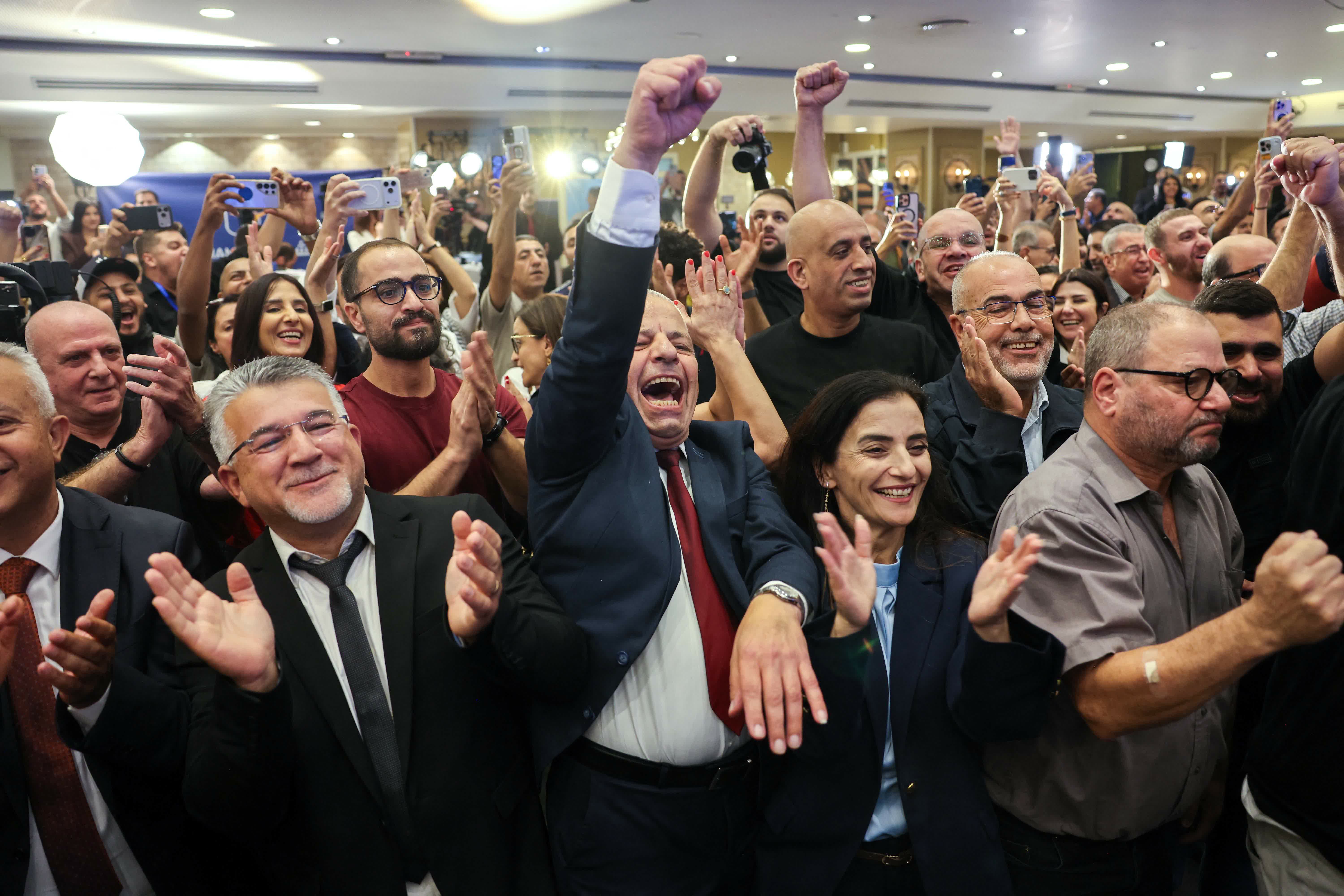
過去,以色列政治主要由猶太政黨之間的左右翼競爭主導。阿拉伯政黨雖然在國會擁有議席,卻長期難以被主要猶太政黨接受為正式執政夥伴。
如今,這種政治界線正面臨考驗。
如果艾森科特希望結束內塔尼亞胡的執政,他可能需要阿拉伯政黨的支持。
但如果他真的這樣做,又可能失去右翼盟友。
內塔尼亞胡顯然明白這一點。
根據原稿引述的消息人士說法,內塔尼亞胡選後的重要策略之一,就是阻止猶太反對派與阿拉伯政黨建立合作關係。
利庫德集團甚至指控阿拉伯政黨透過賄賂、威脅、暴力及舞弊影響選舉結果。
不過,這些是政治指控,並非已獲證實的事實。 以色列選舉當局已否定有系統性大規模舞弊的說法,並表示相關調查不會改變選舉結果。
在我看來,這場爭議背後其實是一個更深層的問題:
阿拉伯裔公民的選票,能否真正成為決定以色列政府組成的政治力量?
如果反對派承認這19席的重要性,就必須面對長期存在的政治分歧。
如果繼續排斥阿拉伯政黨,則可能錯失結束內塔尼亞胡執政的機會。
以色列政治右轉,並沒有因這次選舉而結束
即使內塔尼亞胡最終失去總理職位,也不代表以色列政治會立即轉向溫和。
這次選舉反映出另一個值得注意的現象:
內塔尼亞胡的右翼陣營雖然失去多數,但右翼政治理念在以色列猶太選民中仍然具有相當大的影響力。
以色列建國初期曾長期由中左翼政治力量主導,但如今傳統左翼已大幅萎縮。
在巴勒斯坦問題上,不少主要猶太政黨都反對建立獨立的巴勒斯坦國。
這與國際社會多年來推動的「兩國方案」存在根本分歧。
加沙戰爭更進一步改變了以色列政治。
戰爭造成大量巴勒斯坦人死亡,加劇以色列面臨的國際壓力,也令國內安全問題成為政治競爭的重要議題。
內塔尼亞胡本人還面臨國際刑事法院發出的逮捕令,以及以色列國內的貪腐案件。他否認貪腐指控,認為相關案件具有政治動機。
因此,這次大選不只是選民對一位總理的信任投票。
它也反映出,以色列社會在經歷長期戰爭之後,對安全、巴勒斯坦問題以及國家未來方向的深刻分歧。
伊朗會不會成為內塔尼亞胡的另一張政治牌?
比組閣談判更令人擔憂的,是以色列政治僵局可能與地區軍事局勢互相影響。
原稿引述接近內塔尼亞胡的消息人士的說法,認為他可能利用安全危機爭取政治主動權,甚至推動對伊朗的軍事行動。
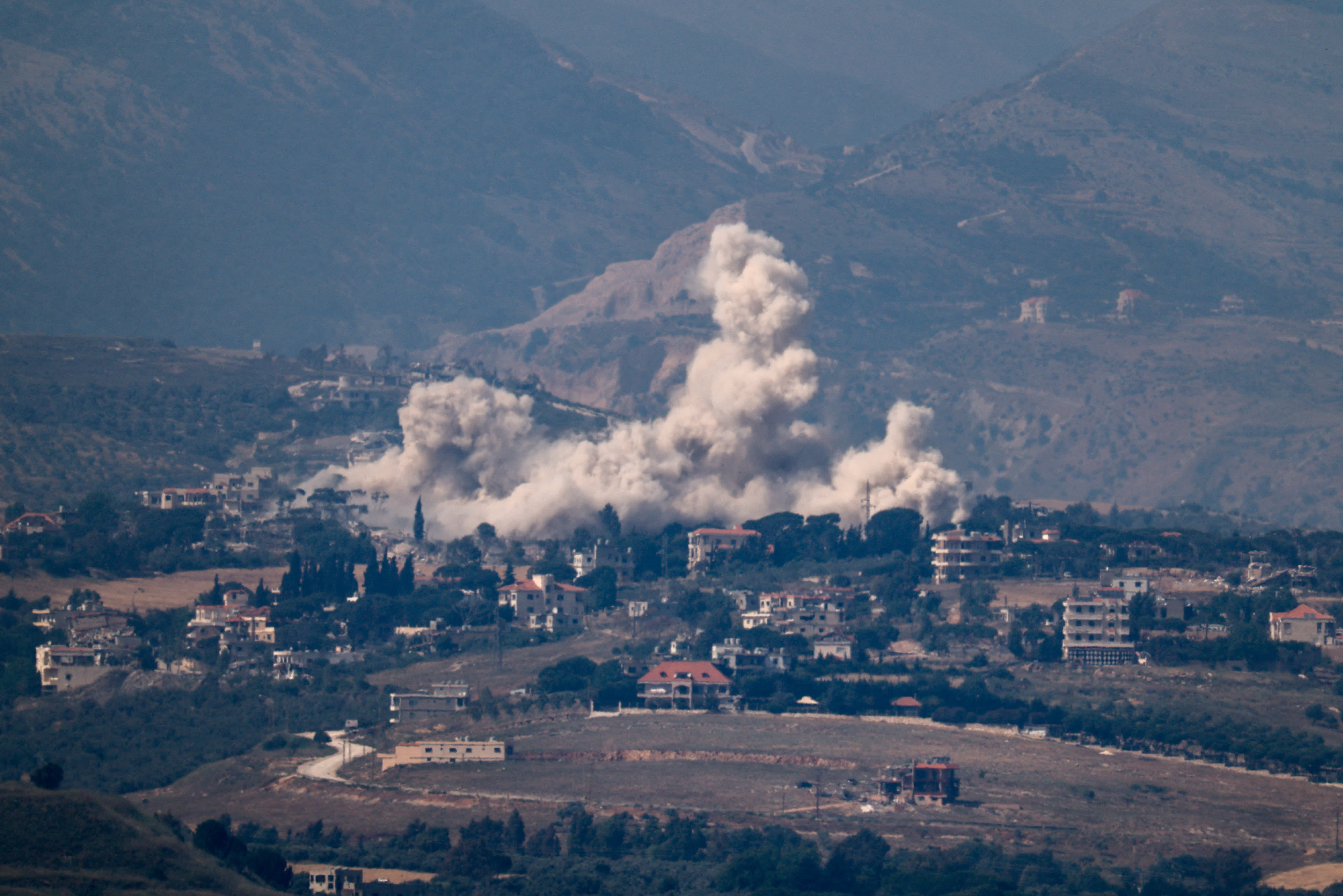
反對派同樣擔心,內塔尼亞胡可能透過新的軍事升級,延緩政治權力交接。
艾森科特已警告以色列安全機構,不應讓國家安全事務成為個人政治利益的工具。
這些擔憂並非完全沒有政治背景。
在以色列,國家安全長期是影響選民態度的重要因素。戰爭或重大安全危機可能改變政治議程,也可能令選民重新評估領導人的能力。
不過,必須指出,有關內塔尼亞胡可能為了保住權力而發動對伊朗軍事行動的說法,仍屬消息人士的推測及反對派的政治憂慮,不能視為已經確定的計劃。
真正值得警惕的是,當一個國家的政府組成陷入僵局,而看守政府仍然掌握重大安全決策權時,國內政治與對外軍事政策之間的界線可能變得更加敏感。
這不僅影響以色列,也可能牽動整個中東局勢。
聯合政府,還是再次大選?
目前擺在以色列政壇面前的,主要有三條道路。
第一條,是艾森科特與阿拉伯政黨達成合作,在國會取得足夠支持,組成反內塔尼亞胡政府。
從議席數字看,這條道路並非沒有可能,但反對派內部的政治分歧可能令它難以實現。
第二條,是成立由內塔尼亞胡與艾森科特共同參與的全國聯合政府。
赫爾佐格已呼籲各黨保持開放態度,盡一切努力避免再次舉行大選。
但艾森科特此前一直拒絕在內塔尼亞胡領導下入閣,包括拒絕由兩人輪流擔任總理的安排。
如果現在改變立場,他可能失去多年來建立的反內塔尼亞胡政治形象。
第三條,則是各方組閣失敗,以色列再次舉行大選。
這對內塔尼亞胡未必是最壞的結果。
因為只要沒有新政府成立,他就可能繼續擔任看守總理,爭取更多時間重新部署政治策略。
反過來說,艾森科特如果未能把目前的反對派議席優勢轉化成政府,下一次選舉也未必能取得更好的結果。
內塔尼亞胡時代,真的走到盡頭了嗎?
這次大選至少揭示了幾個重要事實。
內塔尼亞胡的利庫德集團仍是國會最大黨,右翼陣營也是最大的單一政治集團,但已失去過半議席。
艾森科特領導的反對派如果能與阿拉伯政黨合作,則有機會取得國會多數。
然而,這種數字上的優勢,並不等於真正具備組閣能力。
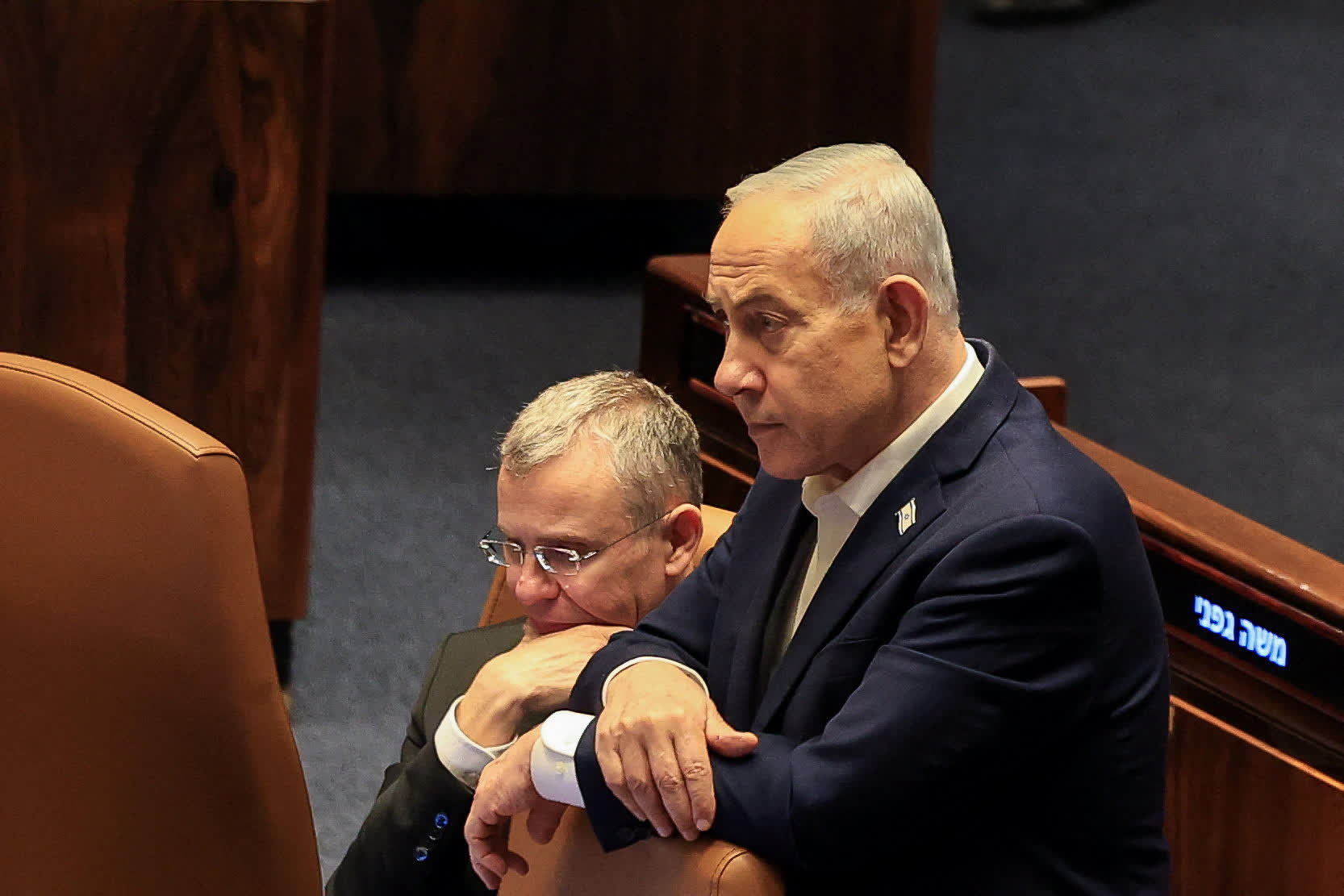
內塔尼亞胡可以嘗試爭取貝內特、利伯曼等政治對手加入,也可以等待反對派談判破裂。
至於全國聯合政府,雖然可能成為打破僵局的方法,卻需要主要政治人物作出重大妥協。
因此,我認為目前還不能斷言內塔尼亞胡的政治生涯已經結束。
他失去了多數議席,卻仍然掌握看守政府的權力。
他的對手獲得了推翻他的機會,卻未必有足夠的政治團結去完成這件事。
而如果所有組閣努力都以失敗告終,以色列可能再次陷入選舉循環。
這次大選最具諷刺意味的地方就在於:反對內塔尼亞胡的力量可能已經取得足夠的選票,卻仍然無法結束他的執政。
在以色列政壇,決定誰能掌權的,從來不只是誰贏得最多選票。
還包括誰能找到盟友、誰能承受政治妥協,以及誰最有耐心等到對手犯錯。
而在這些方面,內塔尼亞胡仍然是一個不可低估的對手。
以下為英文原文:
A Primary reading of the Israeli Elections Results
By Dr. Haytham Mouzahem*
Voting in the Israeli elections concluded yesterday without either of the two main political blocs securing a majority to form a government. Initial results, after 94.4% of the votes were counted, showed Prime Minister Benjamin Netanyahu's bloc winning 53 seats, compared to 48 seats for the opposition Change bloc led by Gadi Eisenkot. Arab parties won 19 seats, according to Israel's Channel 12.
Thus, neither side is close to the required majority of 61 seats out of 120 in the Knesset, opening the door to complex negotiations to form a government, with the possibility of new elections if an agreement cannot be reached.
At the party level, Netanyahu's Likud party led the results with 26 seats, followed by Eisenkot's Yesh Atid party with 21 seats. Naftali Bennett's Ma'an party won 12 seats, and the Joint List of Arab parties secured 11 seats.
The Democratic Party, headed by Yair Golan, and the United Arab List, headed by Mansour Abbas, each won eight seats. The United Torah Judaism, Yisrael Beiteinu, Shas, and Otzma Yehudit parties each won seven seats, while the Religious Zionist Party, headed by Bezalel Smotrich, won six.
Will the double envelopes change the results?
The vote counting process is still underway, coinciding with the counting of the double envelopes, which are expected to number between 430,000 and 480,000 votes, equivalent to approximately eight to nine parliamentary seats. This mechanism allows citizens who are unable to vote at their registered polling stations to cast their ballots elsewhere. This category includes, among others, Israeli soldiers, security forces personnel, prisoners, and hospital patients, according to Hebrew media.
Based on partial results, Netanyahu's bloc needs eight more seats to reach the required majority. The composition of the next government remains contingent on the final vote count and the alliances formed after the election.
The Central Elections Committee announced Tuesday evening that voter turnout reached 77.7%, a 7.1 percentage point increase compared to the 2022 election, noting that it was the highest since 1999.
Netanyahu hasn't won
Israeli Prime minister Benjamin Netanyahu hasn't won. But he hasn't lost either — at least not yet. Now, he must prevent his rivals from building their own government, and he may survive again. He is likely to remain prime minister of a caretaker government in Israel after receiving unexpectedly strong support from Jewish voters, leaving his opponents little chance of ousting him despite his right-wing bloc failing to secure a majority in the Knesset.
Netanyahu will remain in office as caretaker prime minister during any coalition negotiations or until new elections are held next year. While the caretaker government faces some limitations, experts point out that it retains its powers, including those related to war with Iran.
In a statement, Chief of Staff Gadi Eisenkot highlighted Israel’s military successes and hinted at the possibility of resuming joint operations against Iran in cooperation with US President Donald Trump, saying the two countries have a “unique historic opportunity” to “eliminate” the Iranian threat “once and for all.”
Eisenkot acknowledged that Netanyahu remains the caretaker prime minister but warned against the possibility of him using security matters for political gain. “I say to the leaders of the security establishment and the civil service: Netanyahu is a caretaker prime minister, lacking a mandate or the confidence of the people,” he said. “Remember that you serve only the state and the interests of the citizens of Israel. Stand firm against any attempt to pressure you. I support you fully and unconditionally. And to Netanyahu, do not you dare to exploit Israel’s security for your own political purposes.”
The outcome highlights the shift to the right among Israeli Jews during the years Netanyahu has dominated the political landscape. The center-left, which dominated Israel for the first half of its history, has dwindled to a small, marginal force.
Almost all Jewish parties now share Netanyahu’s rejection of a future independent Palestinian state, the very idea that has formed the basis of internationally backed peace efforts since the 1990s.
The elections were Israel's first since its devastating war on the Gaza Strip, which razed the territory to the ground and killed 74,000 Palestinians. The war led to Israel's international isolation and a significant shift in global public opinion against it, including within its closest ally, the United States.
Netanyahu himself is wanted by the International Criminal Court in The Hague on charges of war crimes. He also faces corruption charges in Israel, which he denies, claiming they are a politically motivated conspiracy against him.
What comes next
Following the announcement of the results, Israeli President Isaac Herzog will hold consultations with all political factions and invite the leader he believes has the best chance of success to form a government — a process that could take weeks. If they fail to form a government, another election will ultimately have to be held.
In a political career spanning more than three decades, Netanyahu's political obituary has been written countless times, only for him to prove each time that the eulogy was premature. This week's Israeli election results appear to give the prime minister's opponents a chance to end his run, but in Israel's ruthless political system, nothing is guaranteed.
As vote counting nears its conclusion, Netanyahu's Likud party remains the largest party in the 120-seat parliament, known as the Knesset, with an estimated 26 seats. But his right-wing bloc has lost its majority, expected to win only 53 seats, short of the 61-seat majority needed to govern.
On paper, the opposition holds about 67 seats, but these calculations are fraught with ideological, national and personal rivalries. Netanyahu's main challenger, Gadi Eisenkot, won 21 seats, but the Jewish opposition parties total only 48, well short of victory. To reach 61, they would need the support of two Arab parties, Ra'am and the Joint List, which are projected to win a record 19 seats between them.
Analysts say the record turnout of Arabs or Palestinian citizens of Israel was partly a backlash to four years of a far-right national security minister under whom violence soared in the Arab community.
On Wednesday, Yair Golan, leader of the left-wing Democrats party, called on his partners to count the Arab parties within the bloc, rejecting what he described as Netanyahu's "racist division between Jewish and Arab votes." But two of Eisenkot's right-wing allies, Naftali Bennett and Avigdor Liberman, have opposed any government that depends on the Arab parties.
The Arab Joint List said Wednesday that it was ready for political cooperation and willing to "do everything in its power to bring Netanyahu's rule to an end."
Eisenkot is likely to collect more recommendations than Netanyahu, since the Arab parties are expected to support him.
Then the clock starts ticking. The chosen candidate has 28 days — and a possible 14-day extension — to negotiate with other parties over cabinet posts, budgets and policies in order to form a government. If he fails, the mandate passes to another candidate for another four weeks. If he fails too, the Knesset gets a short window to put forward an alternative candidate. If that fails, the country goes to automatic elections.
Netanyahu, as caretaker prime minister, has a built-in advantage. If Eisenkot receives the mandate first — and fails — all he needs to do is wait for his time to pass. And if Israel finds itself headed for new elections, Netanyahu will remain caretaker for months.
Eisenkot isn't entirely out of options. Even without forming a government, the opposition could still leverage its parliamentary majority to replace the Knesset speaker and other key positions. That could limit Netanyahu's ability to govern and even enable the opposition to advance legislation.
But Eisenkot, a retired general, isn't on his preferred battlefield. Netanyahu's coalition remains incredibly loyal, and he doesn't have to worry in any real way about defections. The same cannot be said for Eisenkot. His diverse coalition is far less ideologically aligned, and even the smallest step could split the bloc and send the country back to elections.
For now, the focus is on Herzog, whose role has become even more important given the current deadlock. With neither bloc holding a clear majority, he may try to push Netanyahu and Eisenkot to form a unity government.
"We must do everything to avoid another round of elections," Herzog said Wednesday. He called on party leaders to come to consultations with an "open mind."
What will Netanyahu do?
A source close to Netanyahu said his main post-election goal is to delegitimize and therefore prevent the Jewish-Arab political cooperation that could send him home. "He is very concerned about a minority government," the source said. Netanyahu even plans to pressure individual opposition lawmakers not to cooperate with the Arab parties. After campaigning against them throughout the election, Likud issued a statement Wednesday accusing the Arab parties of "stealing the election" through bribery, threats, violence and forgery, echoing election fraud claims. The Central Elections Committee said Wednesday it was examining the complaint, but the committee had already dismissed thousands of complaints from various parties on election day.
Netanyahu plans to "neutralize this possibility by all means," the source said, "including launching an attack on Iran or enlisting President Trump to intervene in Israeli politics on his behalf."
The opposition fears that Netanyahu could use a security crisis to stall or block a new government. Before the election, Netanyahu pressed Trump to launch a joint attack on Iran, but Washington held off, partly because Israeli military chief of staff Eyal Zamir warned it could disrupt the vote. An Israeli security source that operational plans are ready and awaiting Trump's approval, possibly after the US midterms.
An opposition source said: "There is no way to know what Netanyahu will do. We are aware that he may try to push for another escalation." Another source said Netanyahu "will do everything he can not to leave the prime minister's office, including stirring domestic and external chaos."
Is Israel heading toward a unity government or another election?
The prospect of a unity government involving Netanyahu and Eisenkot has appeared unlikely, as Eisenkot has refused to serve under Netanyahu, including in a rotation government. Other opposition leaders have also ruled out joining a coalition led by the prime minister.
Eisenkot has called for the leader of the largest party in the opposition bloc to become its candidate for prime minister, though no agreement on the arrangement has been announced within the bloc.
Exit polls also raised the possibility of a minority government that could win a Knesset confidence vote without holding an absolute majority of 61 seats. However, opposition within the bloc to relying on the Arab parties could complicate such an arrangement.
The political deadlock could ultimately lead to another election, although the parties may still reach an agreement through coalition negotiations.
Conclusion
After all votes are counted on Thursday or Friday, the results may change slightly, with Netanyahu's camp gaining or losing a seat or two, and likewise for Eisenkot's camp and the Arab lists. But this will not change the following facts:
- Netanyahu's Likud is the largest party in the Knesset with an average of 26–27 seats.
- The far-right camp led by Netanyahu is the largest bloc in the Knesset with an average of 52–54 seats.
- The anti-Netanyahu opposition camp: Eisenkot's camp plus the Arab lists enjoy a majority of 65–68 seats, making Eisenkot the more entitled to form a government.
- Netanyahu will not be able to form a government unless he can woo one of the lists in Eisenkot's camp, and he may seek to split Avigdor Liberman (7 seats) or Naftali Bennett (12 seats) to join his coalition, giving him a majority of 61 out of 120 to form a government. This will be a difficult task because Liberman and Bennett may condition on a rotating premiership and on being the first prime minister before Netanyahu.
- There is a national unity government option bringing together Netanyahu and Eisenkot, which US President Donald Trump is pushing for, having explicitly declared his support for Netanyahu and his need for him to complete the war against Iran. But Eisenkot would lose the credibility and popularity he built on opposing Netanyahu and working to get rid of him.
- Eisenkot's hesitation and fear of the Zionist right if he relies on the support of the Arab lists makes him unable to form a minority government with Arab cover.
- A likely scenario if no agreement is reached on forming a unity government or neither candidate succeeds in forming a government by securing a 61-seat majority is holding new elections after three or six months. Netanyahu has worked on this and it buys him more time to learn from his mistakes, carry out a military escalation in the region that increases his popularity, and win the next election with a majority that allows him to form a government.
* Dr. Haytham Mouzahem is a Research Fellow at the Belt and Road Research Institute of the Hong Kong Chu Hai College.
 0
已點過讚





評論( 0 )
0 / 255